
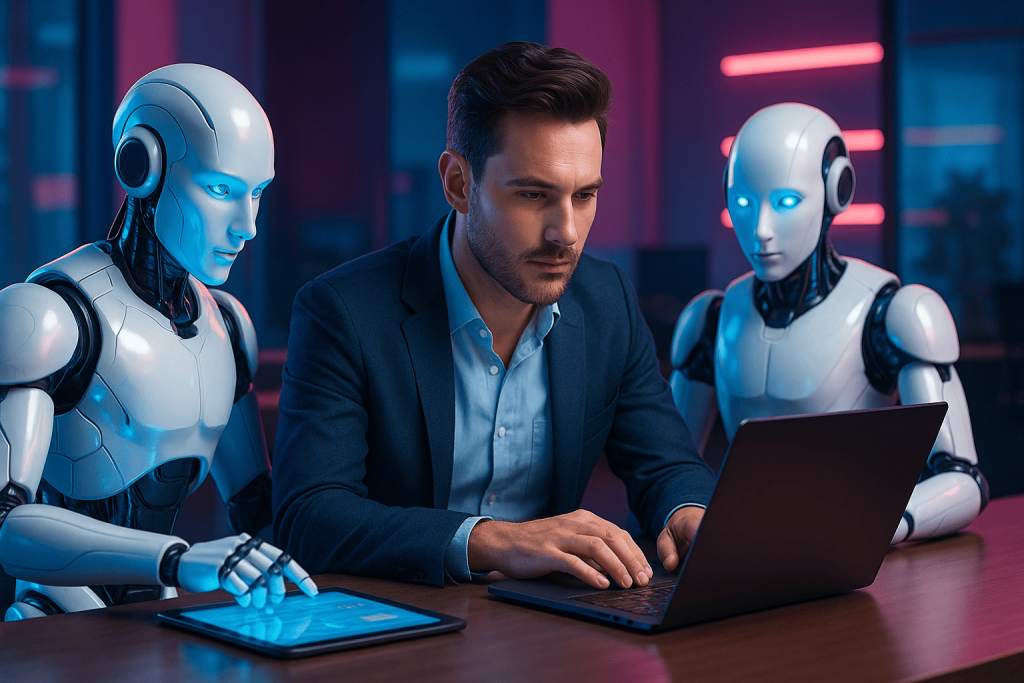
Why AI Assistants Are Becoming the New Co-workers ? The workplace is evolving rapidly. AI assistants are at the forefront of this transformation.
Why AI Assistants Are Becoming the New Co-workers ? The workplace is evolving rapidly. AI assistants are at the forefront of this transformation. They are not just tools; they are becoming essential co-workers.
AI assistants enhance productivity and efficiency. They automate routine tasks, freeing up time for strategic thinking. This shift allows employees to focus on creativity and innovation.
Digital collaboration tools powered by AI are changing how teams work. They enable seamless communication, even in remote settings. This fosters better coordination and project management.
AI-driven efficiency is more than a buzzword. It represents a new era of work where tasks are managed with precision. This reduces errors and increases output.
Virtual team dynamics are also evolving. AI helps teams collaborate across distances, breaking down barriers. This leads to more cohesive and effective teamwork.
Employee experience innovation is another benefit. AI offers personalized support, reducing repetitive tasks. This enhances job satisfaction and engagement.
Augmented intelligence combines human creativity with AI’s analytical power. This synergy leads to superior decision-making and problem-solving.
The future of work is here. AI assistants are not just a trend; they are a necessity. Embracing them is key to staying competitive in today’s fast-paced world.
Understanding AI in the Workplace
Artificial intelligence is transforming the modern workplace. It’s reshaping roles and improving efficiency. Let’s dive into how AI influences work environments.
AI systems automate many routine tasks. They allow employees to focus on higher-level activities. This leads to a more strategic use of human resources.
AI also facilitates better decision-making. By processing vast amounts of data, AI provides invaluable insights. These insights guide companies towards better strategies and outcomes.
Moreover, AI enhances communication within teams. Through digital collaboration tools, even remote teams stay in sync. This seamless integration is key to successful project management.
AI influences the culture of work as well. Companies are evolving to be more adaptive and innovative. AI creates an environment conducive to continuous improvement.
Let’s explore AI’s specific roles:
- Automating routine tasks.
- Enhancing decision-making with data insights.
- Facilitating communication among dispersed teams.
- Improving workplace culture and adaptability.
AI impacts every aspect of business operations. From administration to strategy, AI’s role is expanding. This comprehensive reach makes it indispensable.
Defining AI Assistants and Their Role
Why AI Assistants Are Becoming the New Co-workers ? AI assistants are software agents designed to assist with tasks. They simplify complex processes and enhance productivity. AI assistants are becoming embedded in daily workflows.
These digital assistants perform various tasks:
- Answering inquiries and providing information.
- Managing schedules and reminders.
- Analyzing data for decision-making.
The role of AI assistants is to streamline work. They handle repetitive tasks, allowing human employees to focus on creativity. This balance enhances overall productivity and workplace satisfaction.
Overview of Cognitive Computing and Intelligent Automation
Cognitive computing mimics human thought processes. It enables AI to process data like humans. This technology understands and reasons in a way traditional systems cannot.
Intelligent automation uses AI to execute tasks automatically. It combines cognitive computing with machine learning. This fusion results in improved performance and adaptability.
The benefits of these technologies are significant:
- Streamlining complex workflows.
- Enhancing decision-making capabilities.
- Reducing operational costs.
The synergy of cognitive computing and automation drives efficiency. It transforms traditional processes into streamlined operations. This makes businesses more agile and productive.
The Emergence of Machine Learning Assistants
Machine learning assistants are AI systems that learn from data. They improve over time, becoming more efficient and accurate. These assistants are changing how businesses operate.
Key attributes of machine learning assistants include:
- Continuously learning and adapting.
- Providing predictive insights based on data trends.
- Automating tasks with increased precision.
The emergence of these assistants marks a shift in AI’s role. They not only perform tasks but also offer strategic insights. This enhances decision-making across all levels of an organization.
Machine learning assistants are crucial to staying competitive. They provide actionable insights and automate complex processes. This allows businesses to focus on growth and innovation.
The Benefits of AI Assistants in Work Environments
AI assistants bring numerous benefits to work environments. Why AI Assistants Are Becoming the New Co-workers ? Their influence spans from enhancing productivity to improving communication. Understanding these benefits is key to leveraging AI effectively.
Increased efficiency is one of the primary advantages. AI reduces the manual workload, freeing up time for strategic tasks. This leads to higher productivity levels across the board.
Task management becomes more streamlined with AI. Automated systems prioritize tasks, minimizing human error. Employees can focus more on value-added activities.
AI also enhances team dynamics. It facilitates seamless communication among team members. This is particularly beneficial in a remote or hybrid work setup.
Another significant benefit is improved data analysis. AI-driven data analysis tools provide real-time insights. These insights help in making informed business decisions faster.
Additionally, AI promotes workplace adaptability. Why AI Assistants Are Becoming the New Co-workers ? The workforce can quickly adapt to new tools and processes introduced by AI. This readiness is essential in today’s rapidly changing business landscape.
AI assists in innovation. It encourages creative problem solving by automating routine tasks. Employees can spend more time developing innovative solutions.
Finally, AI nurtures a culture of continuous learning. Employees evolve alongside AI systems, learning new skills. This results in a more resilient and adaptable workforce.
Key areas where AI assistants excel include:
- Task management automation.
- Enhanced communication.
- Improved data analysis.
- Workforce adaptability.
In adopting AI, companies see a transformation in operations. These intelligent solutions offer a competitive edge. Businesses that embrace AI are poised for future success.
Productivity Enhancement Through Task Management Automation
Why AI Assistants Are Becoming the New Co-workers ? Task management automation significantly boosts productivity. AI assistants manage schedules, prioritize tasks, and send reminders. This ensures employees remain focused on critical activities.
Automated systems eliminate the need for manual task monitoring. This reduces the risk of oversight and human error. As a result, projects are completed on time and with greater efficiency.
Consider the diverse ways AI enhances task management:
- Automatically assigning priorities based on deadlines.
- Reminding teams of upcoming meetings or tasks.
- Tracking progress and providing real-time updates.
Automation streamlines workflows. It allows employees to focus on creative and strategic tasks. This shift enhances overall productivity and job satisfaction.
The move towards AI-driven task management fosters workplace efficiency. It reduces stress and increases output. Employees find more time for innovation and development.
Seamless Communication in Hybrid Work Environments
AI supports seamless communication, especially in hybrid environments. It helps maintain consistent interactions among team members. This consistency is vital for remote and in-office personnel.
Digital collaboration tools powered by AI enable these interactions. They provide platforms for real-time discussions and file sharing. This seamless communication ensures everyone stays on the same page.
AI facilitates various communication enhancements:
- Translating languages in real-time for international teams.
- Scheduling meetings without conflicts across time zones.
- Providing instant notifications for team updates.
Hybrid work environments benefit significantly from AI-assisted communication. These tools break down barriers, fostering inclusive collaboration. No matter where employees are, AI keeps them connected.
By embracing AI, companies enhance virtual team dynamics. This results in better project outcomes and stronger team cohesion. AI-driven communication is a cornerstone of modern work environments.
Augmented Intelligence: Enhancing Human Decision-Making
Augmented intelligence combines human intuition with AI’s analytical power. This collaboration elevates decision-making processes. It allows for quicker, more informed decisions.
Why AI Assistants Are Becoming the New Co-workers ? AI systems analyze vast amounts of data swiftly. They present insights that guide strategic planning. This access to timely information enhances confidence in decision-making.
Key benefits of augmented intelligence include:
- Providing predictive analytics for market trends.
- Analyzing consumer behavior for strategic marketing.
- Offering personalized recommendations for customers.
Augmented intelligence is not about replacing human decisions. Instead, it’s about enhancing them with powerful insights. Human creativity combined with AI’s precision results in superior outcomes.
This collaboration is an asset in various industries. It fosters innovation and propels businesses forward. Augmented intelligence is shaping the future of decision-making in the workplace.
Adapting to Future Workplace Trends
Why AI Assistants Are Becoming the New Co-workers ? The workplace is evolving at an unprecedented pace. As AI technologies advance, businesses must adapt to these changes. Embracing future workplace trends is crucial for staying competitive.
Digital collaboration tools are at the forefront of this transformation. These tools facilitate effective remote team dynamics. They foster communication and coordination among dispersed teams.
AI in the workplace extends beyond task automation. It’s about transforming traditional roles and processes. Employees can focus on innovative tasks, driving workforce transformation.
The shift towards hybrid work environments is evident. AI supports this by managing both in-office and remote work seamlessly. This adaptability enhances productivity and employee satisfaction.
AI-driven efficiency impacts all aspects of work. It reduces manual tasks and improves accuracy. These improvements lead to significant productivity enhancement.
AI also plays a role in enhancing the employee experience. By reducing repetitive tasks, employees engage in more meaningful work. This boost in morale often translates to increased loyalty.
Adaptability is crucial in a rapidly changing environment. Companies must continuously learn and adapt AI solutions. This commitment is key to maintaining a competitive edge.
Seamless communication facilitated by AI breaks down barriers. It promotes global collaboration and enhances virtual team dynamics. This connectivity is critical in today’s global market.
Smart office solutions integrate AI to optimize space usage and energy consumption. These solutions create comfortable, efficient workspaces. They also contribute to sustainable business practices.
Virtual team dynamics improve with AI support. Coordinating projects becomes easier, ensuring timely outcomes. AI tools help teams work cohesively, even when geographically dispersed.
Workforce transformation is not just about technology. It’s also about cultivating a culture open to innovation. This cultural shift is vital for embracing AI effectively.
AI enhances cognitive computing by processing and interpreting complex data. This capability supports advanced strategic planning. Companies rely on AI for making informed, forward-thinking decisions.
Digital Collaboration Tools for Remote Team Dynamics
Digital collaboration tools are essential for remote teams. They ensure that dispersed members work harmoniously. These tools bridge the gap between physical distance and effective teamwork.
AI enhances these tools, providing seamless integration. Teams can communicate efficiently, sharing files and updates instantaneously. This real-time access enables better project management.
Consider how digital tools improve remote work:
- Instant messaging platforms for quick communication.
- Video conferencing software for virtual meetings.
- Cloud storage for centralized data access and file sharing.
These tools have revolutionized how teams interact. They offer flexibility and maintain productivity, regardless of location. AI-equipped collaboration platforms enhance decision-making by providing immediate data insights.
The benefits extend beyond efficiency. They support a balanced employee experience, fostering engagement. As remote work becomes the norm, digital tools are indispensable.
Smart Office Solutions Supporting Workforce Transformation
Why AI Assistants Are Becoming the New Co-workers ? Smart office solutions are reshaping workspaces. They integrate AI to create efficient environments. These solutions support the transformation from traditional to modern workplaces.
AI optimizes space use and improves energy management. Smart sensors adjust lighting and temperature automatically. This not only reduces costs but also enhances comfort.
Key features of smart office solutions include:
- Automated climate control systems.
- Space utilization analytics for effective planning.
- Intelligent security systems for enhanced safety.
By adopting these solutions, companies promote sustainability. They reduce energy waste and create eco-friendly environments. This aligns with the growing focus on corporate responsibility.
Smart offices also contribute to workforce transformation. They support flexible work arrangements and enhance productivity. Employees benefit from a workspace that adapts to their needs.
Workplace Adaptability in a Rapidly Changing Environment
Adaptability is essential in today’s dynamic work environment. Businesses must stay ahead by embracing change. AI solutions provide the tools necessary for this agility.
AI drives workplace adaptability through continuous innovation. It introduces new tools and processes that enhance operations. Companies benefit from improved efficiency and flexibility.
To thrive, organizations must focus on:
- Continuous employee training on new technologies.
- Developing a culture open to change and innovation.
- Investing in AI research and development.
The landscape of work is always shifting. By fostering adaptability, businesses prepare for future challenges. This proactive approach ensures sustained growth and success.
Embracing AI solutions accelerates transformation. Companies become more agile and responsive. This readiness empowers them to tackle any changes with confidence.
Human-AI Collaboration: A New Paradigm
The integration of AI in the workplace is creating a new collaboration paradigm. Human-AI collaboration enhances productivity and fosters innovation. It combines human intuition with AI precision, transforming tasks and decision-making.
AI takes over routine and time-consuming tasks. This allows humans to focus on strategic initiatives and creative solutions. The synergy between AI and human skills results in significant workforce transformation.
Virtual team dynamics also benefit from AI’s capabilities. AI tools support better project management and coordination. They facilitate seamless communication across different time zones and locations.
Seamless communication between AI systems and employees is crucial. AI platforms must be intuitive and easy to use. User-friendly interfaces ensure that technology enhances rather than hinders productivity.
AI-driven efficiency is not just about speed. It involves making informed decisions based on real-time data analysis. Augmented intelligence creates opportunities for more strategic actions.
Companies are investing in AI-driven employee experience innovation. These initiatives personalize support and improve job satisfaction. Enhanced employee engagement leads to better performance and retention.
To fully leverage AI’s potential, a cultural shift is necessary. Organizations must embrace technology and foster an innovation-friendly environment. Training employees to work with AI systems is essential.
Intelligent automation streamlines operations, reducing cost and waste. It frees up resources for higher-value tasks, amplifying productivity. Organizations become more adaptable and resilient to change.
Hybrid work environments thrive with AI support. They manage remote and in-office work efficiently, ensuring smooth operations. This flexibility is vital in the modern, ever-evolving business landscape.
AI in the workplace is not just a trend; it’s a revolution. It requires a reevaluation of roles and responsibilities. Preparing employees for an AI-powered future is key.
The Importance of Employee Experience Innovation
Employee experience plays a crucial role in workplace success. AI-driven experience innovation offers significant benefits. It enhances job satisfaction and boosts productivity.
AI personalizes employee interactions, tailoring support to individual needs. It reduces repetitive tasks, allowing employees to focus on strategic work. This shift results in increased engagement and retention.
List of benefits associated with AI-driven employee experience:
- Personalized training and development programs.
- Automated administrative tasks to reduce workload.
- Real-time feedback and performance evaluations.
AI technologies elevate workplace adaptability. They offer insights into employee well-being and engagement. Managers can address concerns proactively, ensuring a supportive environment.
Innovation in employee experience transforms company culture. It encourages continuous learning and development. An engaged workforce is more productive and committed.
Balancing Human Skills with AI-Driven Efficiency
AI’s role in augmenting human skills cannot be understated. It provides tools for enhancing decision-making and task efficiency. Finding the right balance between human skills and AI efficiency is vital.
AI supports augmented intelligence by analyzing vast data quickly. Humans leverage these insights for strategic decisions. Combining human creativity with AI’s analytical power results in more effective solutions.
Benefits of balancing human skills and AI-driven efficiency include:
- Improved decision-making with AI-generated insights.
- Enhanced creativity through AI-assisted innovation tools.
- Increased focus on strategic, high-value tasks.
Balancing these elements requires thoughtful implementation. Training employees to adapt to AI systems fosters a collaborative culture. They need to see AI as a partner, not a replacement.
The future workplace is about harmony between human and machine. Organizations that master this balance gain a competitive edge. They drive innovation and maintain high productivity.
Case Studies on Successful AI and Human Team Integration
Examining real-world examples reveals how AI and human teams succeed. Companies across industries showcase this integration. Their experiences offer valuable lessons for others embracing AI.
Consider these exemplary case studies:
- Retail: A leading retailer used AI to optimize inventory and predict trends. This integration reduced stockouts by 30% and increased sales.
- Healthcare: AI-assisted diagnostics in a hospital improved accuracy. Human doctors, aided by AI, saw a 25% reduction in diagnostic errors.
- Finance: A financial firm implemented AI for risk management. Combining AI with expert analysts, they enhanced fraud detection by 40%.
- Manufacturing: AI-driven maintenance predicted equipment failures. Human technicians and AI reduced downtime by 45%, improving productivity.
These cases demonstrate practical applications of AI-human collaboration. Success stems from the strategic deployment of AI tools. Tailoring solutions to specific challenges leads to remarkable outcomes.
Organizations should leverage AI to complement human strengths. They create more resilient, innovative, and efficient teams. These examples highlight the immense potential of human-AI collaboration.
Preparing for the AI-Powered Future
The future workplace will be heavily influenced by AI technologies. Companies are already taking steps to prepare for this shift. Embracing AI requires strategic planning and innovation.
Understanding how to integrate AI into daily operations is crucial. AI offers opportunities to streamline processes and optimize efficiency. Adoption of AI-driven tools is on the rise across industries.
Organizations must focus on building AI literacy among employees. Training programs can ease the transition and maximize AI benefits. A knowledgeable workforce can leverage AI technologies effectively.
AI in the workplace enhances decision-making capabilities. With cognitive computing, machines offer data-driven insights swiftly. Human intelligence, combined with AI analysis, is powerful.
Businesses adopting AI witness increased productivity and agility. They gain a competitive advantage by responding quickly to market changes. Future workplace trends depend on successful AI integration.
Companies must invest in digital collaboration tools. These tools facilitate seamless communication and coordination among teams. Robust infrastructure is essential for efficient remote work.
Emphasizing workplace adaptability helps companies thrive amid change. AI technologies bring transformative potential that requires adaptability. Organizations must be flexible to integrate new tools and processes.
A successful AI-driven future involves balancing human creativity and AI precision. This human-AI collaboration leads to innovative solutions. Employees must be encouraged to think creatively and use AI.
AI helps automate routine tasks, freeing up employees for strategic initiatives. This shift in workload enables more focus on value-added activities. Enhanced productivity is a natural outcome.
Investment in employee experience innovation is crucial. AI can personalize support and reduce repetitive tasks. Happy employees are more productive and loyal, benefiting the company.
As AI becomes integral to operations, ethical considerations are vital. Ensuring transparency and fairness in AI implementation is important. Establishing ethical frameworks guides responsible AI use.
Companies face challenges in AI adoption and must address them. Overcoming resistance to change requires effective communication strategies. Involving all stakeholders ensures smoother transitions.
Ultimately, preparing for an AI-powered future is about embracing change. Companies that adapt quickly can seize new opportunities. Being proactive in this transformation is essential for success.
Leveraging Data Analysis Tools for Strategic Decisions
Data analysis tools are key to strategic decision-making. AI technologies offer powerful solutions for managing large datasets. Companies that utilize these tools gain invaluable insights.
Real-time data analysis enables swift decision-making. AI-driven analytics help identify market trends and consumer behavior. This facilitates more informed and effective business strategies.
Using data analysis tools offers distinct advantages:
- Improved accuracy in predictions.
- Quick identification of emerging trends and opportunities.
- Enhanced customer insights for personalized marketing strategies.
Companies can innovate using insights from AI-driven analysis. Strategic decisions backed by data lead to better outcomes. Businesses can stay ahead by anticipating industry shifts.
The future workplace relies on data-driven decisions. AI tools transform raw data into strategic assets. Organizations must prioritize investing in these technologies for success.
Integrating Remote Work Technologies in Daily Operations
Remote work technologies are transforming how teams operate. Integration with AI enhances their effectiveness and adaptability. Companies need to embrace these technologies for smooth operations.
AI tools facilitate virtual meetings and collaborative work. Teams can communicate seamlessly across distances. This promotes productivity and efficiency irrespective of location.
Consider these key integration benefits:
- Streamlined communication with digital tools.
- Enhanced collaboration through cloud-based platforms.
- Improved project management with AI-assisted scheduling.
Implementing remote work technologies requires careful planning. Ensuring robust digital infrastructure is critical. Employees must access reliable tools to perform their duties effectively.
Remote work is no longer a temporary solution. It forms a permanent part of modern work environments. Companies prepared for this integration will thrive in future landscapes.
Steps to Foster a Culture of AI Collaboration
Establishing a culture of AI collaboration is essential for success. Companies must cultivate an environment where technology and people thrive together.
Start by fostering an open mindset towards AI integration. Encourage employees to view AI as a tool for enhancement, not replacement. This mindset shift is vital for effective collaboration.
Consider these steps to foster AI collaboration:
- Educate employees on AI capabilities and applications.
- Encourage experimentation with AI tools in daily tasks.
- Promote cross-functional teams to explore AI-driven innovations.
Regular training programs enhance AI literacy across the organization. Employees equipped with AI knowledge can contribute to innovative solutions. They become more comfortable incorporating AI into workflows.
Leaders play a crucial role in shaping this culture. They must lead by example and embrace AI technologies themselves. A united leadership approach inspires the entire workforce to follow.
Creating a supportive AI collaboration culture prepares companies for the future. It enhances productivity, innovation, and adaptability. Organizations embracing this culture gain a competitive edge in the evolving landscape.
I don’t think the title of your article matches the content lol. Just kidding, mainly because I had some doubts after reading the article. https://accounts.binance.info/hu/register-person?ref=IQY5TET4
Can you be more specific about the content of your article? After reading it, I still have some doubts. Hope you can help me.
Your point of view caught my eye and was very interesting. Thanks. I have a question for you.
Thank you for your sharing. I am worried that I lack creative ideas. It is your article that makes me full of hope. Thank you. But, I have a question, can you help me?
I don’t think the title of your article matches the content lol. Just kidding, mainly because I had some doubts after reading the article.
Your article helped me a lot, is there any more related content? Thanks! https://www.binance.com/register?ref=IXBIAFVY
Your article helped me a lot, is there any more related content? Thanks! https://accounts.binance.com/tr/register-person?ref=MST5ZREF
Your point of view caught my eye and was very interesting. Thanks. I have a question for you.
I don’t think the title of your article matches the content lol. Just kidding, mainly because I had some doubts after reading the article. https://www.binance.com/ka-GE/register?ref=ILE8IH9H
Thank you for your sharing. I am worried that I lack creative ideas. It is your article that makes me full of hope. Thank you. But, I have a question, can you help me?
I don’t think the title of your article matches the content lol. Just kidding, mainly because I had some doubts after reading the article.
Can you be more specific about the content of your article? After reading it, I still have some doubts. Hope you can help me. https://accounts.binance.com/register-person?ref=IHJUI7TF
Your point of view caught my eye and was very interesting. Thanks. I have a question for you. https://accounts.binance.com/es-MX/register-person?ref=GJY4VW8W
Thank you for your sharing. I am worried that I lack creative ideas. It is your article that makes me full of hope. Thank you. But, I have a question, can you help me? https://www.binance.com/register?ref=QCGZMHR6
Your article helped me a lot, is there any more related content? Thanks!
Thanks for sharing. I read many of your blog posts, cool, your blog is very good.
Your article helped me a lot, is there any more related content? Thanks!
I don’t think the title of your article matches the content lol. Just kidding, mainly because I had some doubts after reading the article. https://www.binance.info/register?ref=QCGZMHR6
Thank you for your sharing. I am worried that I lack creative ideas. It is your article that makes me full of hope. Thank you. But, I have a question, can you help me? https://www.binance.bh/register?ref=IHJUI7TF
Your article helped me a lot, is there any more related content? Thanks! https://accounts.binance.com/pl/register?ref=UM6SMJM3
Thanks for sharing. I read many of your blog posts, cool, your blog is very good.
I don’t think the title of your article matches the content lol. Just kidding, mainly because I had some doubts after reading the article.
Thanks for sharing. I read many of your blog posts, cool, your blog is very good. https://www.binance.bh/futures/ref?code=L4EUT9FG
Your point of view caught my eye and was very interesting. Thanks. I have a question for you. https://accounts.binance.bh/register/person?ref=IHJUI7TF
Can you be more specific about the content of your article? After reading it, I still have some doubts. Hope you can help me.
Thanks for sharing. I read many of your blog posts, cool, your blog is very good.
Can you be more specific about the content of your article? After reading it, I still have some doubts. Hope you can help me. https://www.binance.bh/register?ref=MBLCVVZG
I don’t think the title of your article matches the content lol. Just kidding, mainly because I had some doubts after reading the article. https://accounts.binance.bh/register/person?ref=GGYHGRE
I don’t think the title of your article matches the content lol. Just kidding, mainly because I had some doubts after reading the article. https://accounts.binance.com/register/person?ref=W49FLGDN
Thanks for sharing. I read many of your blog posts, cool, your blog is very good.
I don’t think the title of your article matches the content lol. Just kidding, mainly because I had some doubts after reading the article.
Thanks for sharing. I read many of your blog posts, cool, your blog is very good.
Thanks for sharing. I read many of your blog posts, cool, your blog is very good.
I don’t think the title of your article matches the content lol. Just kidding, mainly because I had some doubts after reading the article.
Thanks for sharing. I read many of your blog posts, cool, your blog is very good. 免费Binance账户
I don’t think the title of your article matches the content lol. Just kidding, mainly because I had some doubts after reading the article. gratis binance-konto
Your point of view caught my eye and was very interesting. Thanks. I have a question for you. https://accounts.binance.com/ar/register?ref=PORL8W0Z
Thanks for sharing. I read many of your blog posts, cool, your blog is very good. https://www.binance.com/register?ref=GGYHGRE
I don’t think the title of your article matches the content lol. Just kidding, mainly because I had some doubts after reading the article.
I don’t think the title of your article matches the content lol. Just kidding, mainly because I had some doubts after reading the article. https://www.binance.bh/pt-PT/register?ref=KDN7HDOR
I don’t think the title of your article matches the content lol. Just kidding, mainly because I had some doubts after reading the article. https://accounts.binance.com/si-LK/register?ref=LBF8F65G
Just signed up for bk999game. Quick process and they loaded my free spins. Ready to go! Go try em out today bk999game.
Yo, just found this epiwingamedownload site. Looks legit, might have to give it a whirl tonight. Fingers crossed it’s not some dodgy scam. Check it out for yourself: epiwingamedownload
Alright dudes, anyone else trying to sign up for j777? That j777loginregister process was a bit clunky, but hopefully worth it for the games! Let me know your experience at j777loginregister
Can you be more specific about the content of your article? After reading it, I still have some doubts. Hope you can help me. https://accounts.binance.com/register/person?ref=GGYHGRE
Jillibay? Sounds kinda chill! Hope the games are as relaxing as the name. Worth checking out. Give it a try: jillibay
KK345bet, eh? Might give this one a go. Worth having a look maybe? Give it a go here: kk345bet
Pinupcassino? Okay, the name’s kinda fun. Hoping for some good luck and maybe a great welcome bonus. I would def check this one out: pinupcassino
Your article helped me a lot, is there any more related content? Thanks!
Thanks for sharing. I read many of your blog posts, cool, your blog is very good. https://www.binance.com/register?ref=IXBIAFVY
Your article helped me a lot, is there any more related content? Thanks!
Your article helped me a lot, is there any more related content? Thanks!
Can you be more specific about the content of your article? After reading it, I still have some doubts. Hope you can help me. https://www.binance.bh/futures/ref?code=IHJUI7TF
I don’t think the title of your article matches the content lol. Just kidding, mainly because I had some doubts after reading the article. https://accounts.binance.com/register/person?ref=GGYHGRE
Thank you for your sharing. I am worried that I lack creative ideas. It is your article that makes me full of hope. Thank you. But, I have a question, can you help me?
Thank you for your sharing. I am worried that I lack creative ideas. It is your article that makes me full of hope. Thank you. But, I have a question, can you help me? https://www.binance.com/register?ref=IHJUI7TF
Your article helped me a lot, is there any more related content? Thanks!
Your article helped me a lot, is there any more related content? Thanks!
I don’t think the title of your article matches the content lol. Just kidding, mainly because I had some doubts after reading the article.
Thank you for your sharing. I am worried that I lack creative ideas. It is your article that makes me full of hope. Thank you. But, I have a question, can you help me? https://www.binance.com/register?ref=JW3W4Y3A
Can you be more specific about the content of your article? After reading it, I still have some doubts. Hope you can help me. https://www.binance.bh/register?ref=QCGZMHR6
I don’t think the title of your article matches the content lol. Just kidding, mainly because I had some doubts after reading the article. https://accounts.binance.com/es/register-person?ref=RQUR4BEO
Can you be more specific about the content of your article? After reading it, I still have some doubts. Hope you can help me. https://accounts.binance.com/register/person?ref=IHJUI7TF
Great read, thanks for sharing this. Found some related notes here that may help other readers. goldmining
The app performance is surprisingly fast. I didn’t experience any lag during my session today. Great job on the optimization fj777app
Your point of view caught my eye and was very interesting. Thanks. I have a question for you. https://accounts.binance.info/uk-UA/register?ref=XZNNWTW7