
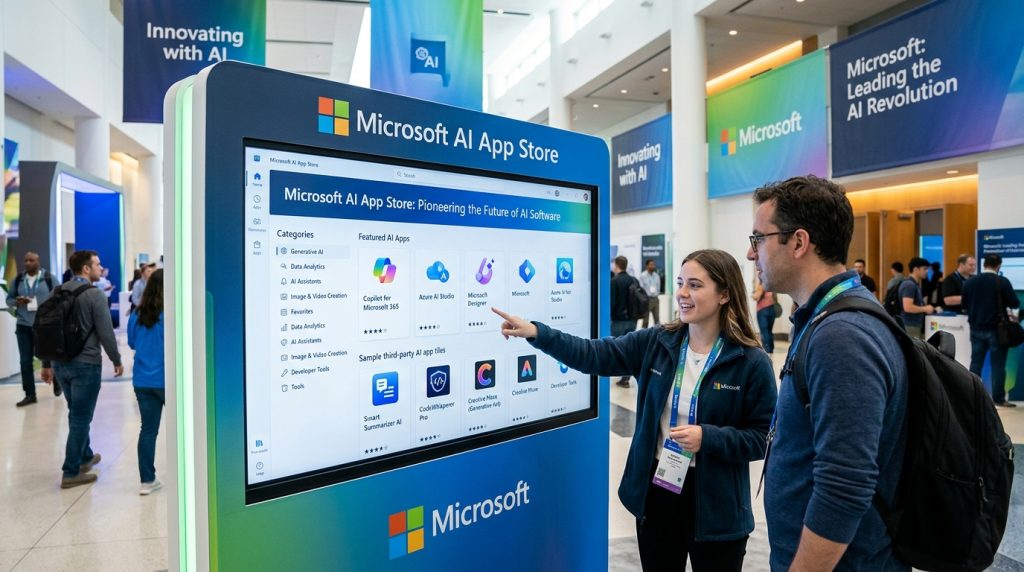
Microsoft’s AI App Store: Pioneering the Future of AI Software and Distribution
In the rapidly evolving landscape of artificial intelligence, one company consistently makes moves that ripple across the entire tech industry. Microsoft, a titan synonymous with software innovation for decades, is once again at the forefront, signaling a bold new direction with the conceptualization of an AI App Store. This isn’t just an incremental update; it’s a foundational shift, promising to revolutionize how we develop, distribute, and consume AI-powered tools and services. Get ready for a seismic change in the AI ecosystem, as Microsoft lays the groundwork for the next generation of digital experience.
The Dawn of a New AI Ecosystem
For years, the development and deployment of AI have often been siloed, requiring specialized knowledge, complex infrastructure, and significant resources. While powerful, this fragmented approach has limited widespread adoption and slowed the pace of true AI innovation for many businesses and individuals. Enter Microsoft AI, with a vision to democratize access to cutting-edge artificial intelligence through a centralized marketplace.
Imagine a world where powerful AI models, specialized agents, and intelligent copilots are as readily available as your favorite mobile apps. This is the promise of Microsoft’s impending AI App Store. It aims to unify diverse AI capabilities, from advanced language models to sophisticated image recognition and data analytics tools, under one roof. This move is crucial for fostering a more interconnected and accessible AI ecosystem, where developers can find the perfect components to build their solutions, and users can discover AI tools tailored precisely to their needs.
Redefining Software Distribution for the AI Era
The concept of an app store isn’t new, but applying it specifically to AI redefines the very notion of software distribution. Traditional software often comes as a monolithic package. AI applications, however, are often modular, relying on constantly evolving models, services, and data. An AI App Store will likely cater to this unique architecture, offering more than just executables:
- Pre-trained Models: Developers could offer fine-tuned models for specific tasks, allowing others to integrate powerful AI without needing to train from scratch.
- AI Services & APIs: Instead of full applications, the store might feature plug-and-play AI services that developers can call upon for specific functions (e.g., sentiment analysis API, content generation service).
- Specialized AI Agents: Imagine downloading an AI agent designed to manage your emails, optimize your schedule, or even conduct market research.
- AI-Enhanced Copilots & Plugins: Extensions for existing software (like Microsoft 365 or industry-specific tools) that infuse them with advanced AI capabilities.
This approach moves beyond simply selling software licenses to enabling dynamic, on-demand access to intelligence. It transforms software distribution from a static transaction into a continuous, evolving exchange of AI capabilities, dramatically lowering the barrier to entry for both AI creators and consumers.
What an AI App Store Looks Like (and Why it Matters)
While details are still emerging, we can envision a platform where developers submit their AI models, services, and applications, adhering to Microsoft’s guidelines for performance, security, and ethical AI. Users, in turn, will be able to browse, review, and integrate these AI solutions seamlessly into their workflows and existing applications. This centralization will be a massive accelerant for AI innovation.
The implications are profound. For developers, it means a global marketplace to monetize their AI expertise without needing extensive marketing or infrastructure. For businesses and individuals, it means unprecedented access to sophisticated AI, tailored for everything from hyper-personalized customer service to cutting-edge scientific research. This isn’t merely a new storefront; it’s a new paradigm for interacting with technology, making powerful AI accessible and actionable for everyone, regardless of technical prowess.
Catalyzing the Future of AI Applications
This strategic move by Microsoft isn’t happening in a vacuum. It acknowledges the growing complexity and power of large language models and other generative AI, setting the stage for a new generation of software. The future of AI applications will be defined by their ability to adapt, learn, and integrate contextually, moving beyond static functionality to dynamic intelligence. The AI App Store will be the crucible for this transformation, enabling a Cambrian explosion of highly specialized, intuitive, and potent AI tools.
This initiative will undoubtedly influence other major AI platforms, potentially pushing them to develop similar marketplaces or enhance their own developer ecosystems. Microsoft’s existing dominance in enterprise software and its deep integration with Azure cloud services provide a powerful foundation for this venture, giving it a significant head start in shaping the global AI landscape.
Conclusion: Microsoft’s Vision for an AI-First World
Microsoft’s foray into an AI App Store is more than just a business decision; it’s a strategic declaration of intent to lead the next era of computing. By creating a vibrant marketplace for AI, Microsoft is not only opening new avenues for software distribution but also actively fostering an environment ripe for unprecedented AI innovation. This bold move promises to unlock the full potential of artificial intelligence, making sophisticated tools universally accessible and paving the way for a future where AI isn’t just a feature, but the core intelligence woven into the fabric of our digital lives. The revolution in AI software has truly begun.